Guest guide
Manta season in the Dampier Strait, Manta Sandy, Cape Kri and Blue Magic
When to see manta rays in Raja Ampat's Dampier Strait, how Manta Sandy, Cape Kri and Blue Magic differ, and how to dive responsibly around mantas.

DAMPIER team
October 5, 2026 · 3 min read
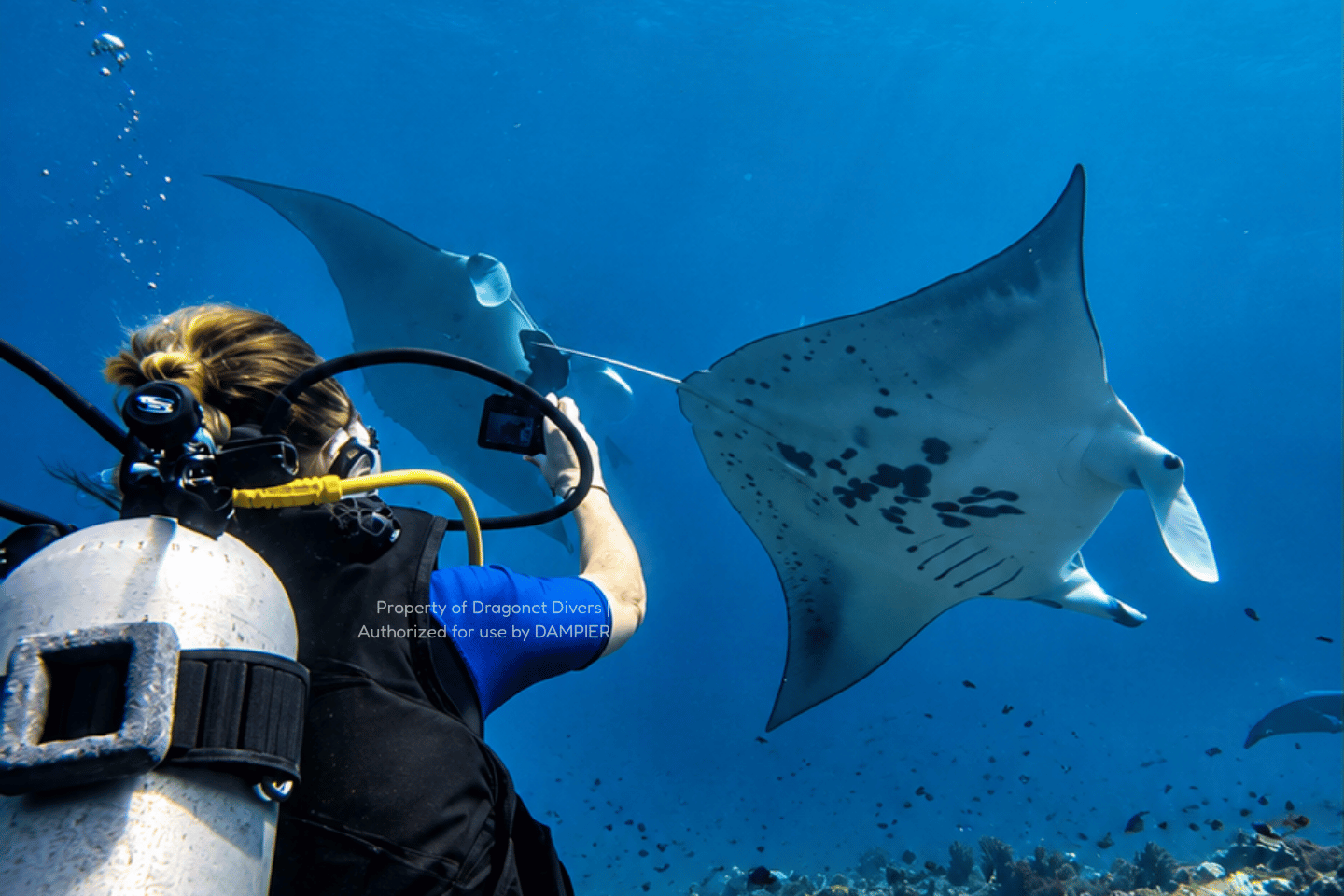
The Dampier Strait, the channel between Waigeo and Batanta islands, is one of the easiest places in the world to see manta rays in the wild. Its currents carry plankton, and mantas come to feed and to be cleaned by small fish at cleaning stations. Here is a short guide to when to come, where to go and how to behave around them.
When is manta season
Mantas can be seen in the Dampier Strait all year round. The busiest period is usually around October–April, when the sea is calmer and plankton is plentiful. In the middle of the year the southeast wind makes southern Raja Ampat rougher, but the Dampier Strait is relatively sheltered, so manta dives often still go ahead. Ask your operator about current conditions before you book, because weather and currents can change from week to week.
Two kinds of manta
Raja Ampat has two species of manta. Reef mantas (Mobula alfredi) are the ones you will see most, with a wingspan of up to about 5 metres. Oceanic mantas (Mobula birostris) are bigger, reaching 7 metres, and are seen less often. Some of Raja Ampat's mantas are almost entirely black, known as melanistic mantas.
Manta Sandy
Manta Sandy lies between Mansuar and Arborek islands. The bottom is sand and coral rubble, with a few coral heads that act as cleaning stations. Divers wait behind a line of marker stones while the mantas circle above the station. The current is usually mild, which makes it suitable for divers with an entry level certification. When visibility is good, snorkellers can sometimes see mantas from the surface.
Cape Kri
Cape Kri, at the eastern tip of Kri island, is famous for its fish diversity. This is where ichthyologist Gerald Allen counted 374 fish species on a single dive, a record known throughout the diving world. Mantas are not regulars at Cape Kri, but they do pass by now and then. Come for the schooling fish, reef sharks and dense coral, and treat a manta as a bonus. The current can be strong, so follow your guide.
Blue Magic
Blue Magic is a small seamount between Mansuar and Cendana islands. Its top sits below the surface, surrounded by blue water, and the current is often strong. This is your best chance to see oceanic mantas, along with schools of barracuda and trevally and wobbegong sharks hiding in the reef. Because of the current and the lack of a wall for reference, Blue Magic suits experienced divers with an advanced certification.
Rules around mantas
Mantas in Raja Ampat are protected. Raja Ampat Regency declared its waters a shark and manta ray sanctuary in 2010, and Indonesia gave mantas full protection in 2014. At cleaning stations, a few simple rules apply to everyone.
- Stay low behind the marker stones and never swim up onto the cleaning station.
- Do not touch, chase or block a manta's path. Let them come to you.
- Keep your buoyancy under control so you do not kick up sand or break coral.
- Snorkellers do not dive down towards mantas or swim directly above them.
- Respect boat limits and follow your local guide.
Seeing mantas with DAMPIER
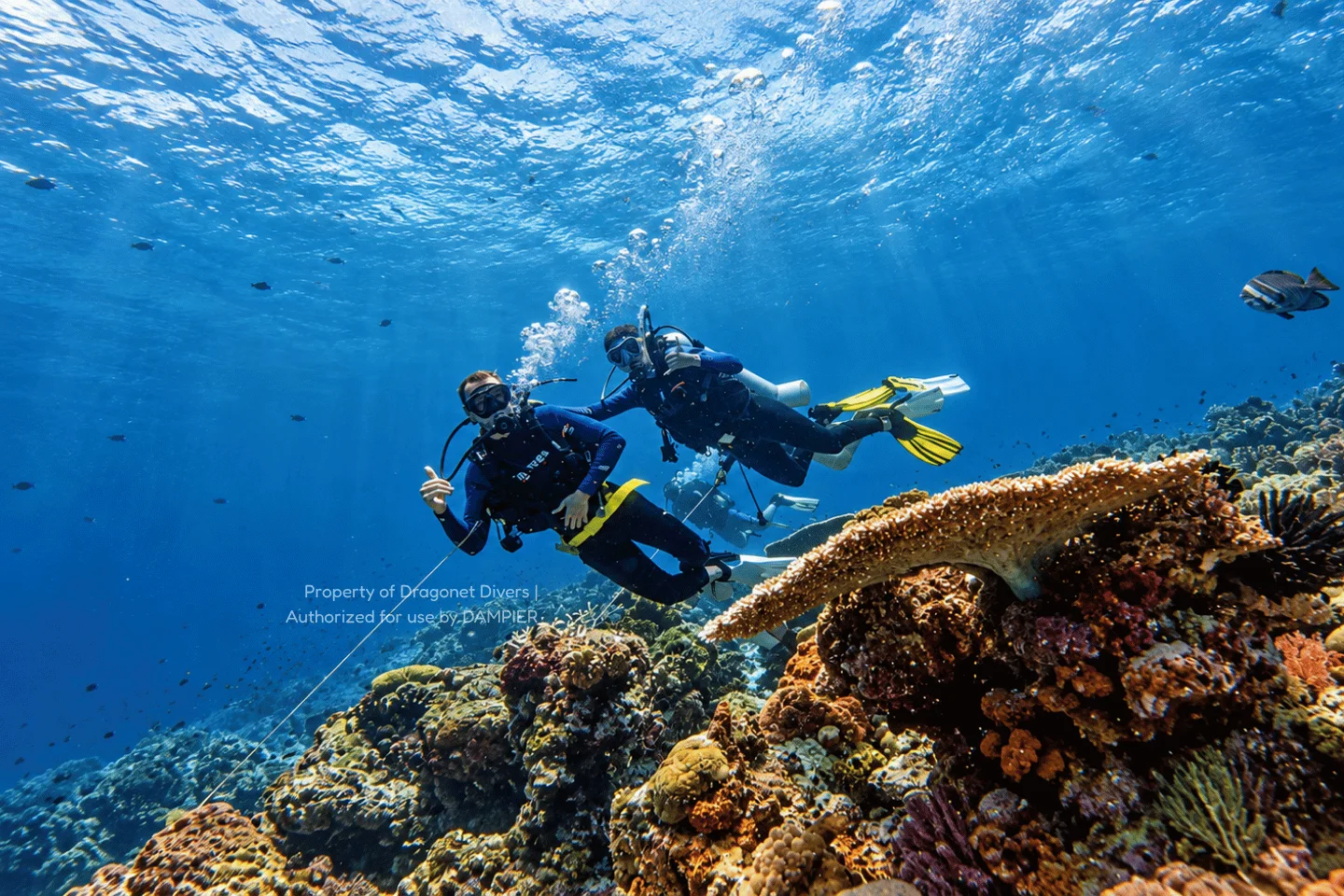
DAMPIER partner dive operators and homestays in the Dampier Strait take guests to Manta Sandy, Cape Kri and Blue Magic with local guides who know the currents. On the Explore page you can compare packages and prices. The Raja Ampat tourism levy is paid separately on SIPARI before arrival.
Share this article